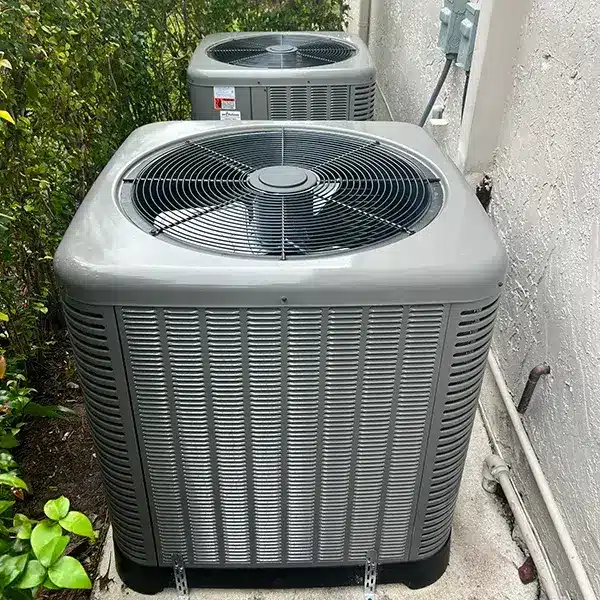
Installing central air conditioning is one of the bigger home improvement decisions you’ll make in South Florida. Before the work begins, there’s one question worth answering upfront: do you need a permit? The answer affects how the job gets done, who does it, and whether your investment is protected.
Quick Answer: Central Air Conditioning Installation Permits in SE Florida
Yes, installing central air conditioning in SE Florida requires a permit. The Florida Building Code classifies central AC installation as regulated HVAC work, which means a permit must be pulled, the installation must be performed by a licensed contractor, and the finished work must pass a building inspection.
Why Central Air Conditioning Requires a Permit in SE Florida
Central AC is not a simple appliance swap. Installing a new system from scratch involves:
- Ductwork design and installation
- Electrical connections and wiring
- Refrigerant line installation and charging
- Drainage system setup
- Equipment sizing calculations to match your home’s load
Each of these touches regulated systems under the Florida Building Code. The permit creates a paper trail confirming the work was done correctly and inspected.
In SE Florida specifically, the stakes are higher than in most states. Systems run nearly year-round. Undersized or improperly installed equipment fails faster, costs more to operate, and is more likely to cause moisture problems. A permit-backed installation protects against all of that.
If you’re planning a new central AC system, Airfellows handles AC installation services including permitting and inspections as part of every job.
Who Is Responsible for Pulling the Permit?
Your HVAC contractor. Not you.
In Florida, only a licensed mechanical contractor can legally install a central air conditioning system. The permit is tied to their license, and they submit the application to the local building department on your behalf.
What this means in practice: never work with a company that asks you to pull your own permit, skips the permit entirely, or treats it as optional. Those are red flags.
What Counties Require It
Every county in SE Florida requires a permit for central AC installation:
- Palm Beach County
- Broward County
- Miami-Dade County
- Brevard County (Space Coast)
Individual cities within those counties may have slightly different processes and timelines, but the requirement is consistent. There is no jurisdiction in SE Florida where new central AC installation is permit-free.
What Most Guides Skip: The Manual J Sizing Requirement
One thing rarely covered in basic permit guides is that Florida requires a Manual J load calculation before a new central AC system is installed. This is a heat load analysis specific to your home’s square footage, insulation, window orientation, and occupancy.
Skipping this step (or using a rough estimate instead of a real calculation) is a code violation, even if everything else is permitted. It also leads to oversized systems that short-cycle and undersized systems that never keep up in July.
When you work with Airfellows, this calculation is part of the central AC installation options we walk through before any equipment is ordered.
What the Inspection Covers
Once your Airfellows technician completes the installation, a county or city inspector visits to verify:
- Proper equipment sizing per the Manual J calculation
- Correct refrigerant charge
- Code-compliant electrical connections
- Drainage line installation and slope
- Ductwork sealing and connections
Most installations pass on the first visit when the work is done by a licensed team.
What Happens If You Install Without a Permit
Common consequences of skipping the permit on a central AC installation:
1. Unpermitted work flagged at resale. Buyers’ inspectors routinely check permit history. Unpermitted HVAC work is a common deal-breaker.
2. Retroactive permit costs. Some municipalities allow after-the-fact permits, but they often cost more and require additional inspections.
3. Insurance complications. If a fire, flood, or system failure is linked to improperly installed HVAC equipment, your insurer may deny the claim.
4. Fines. Local code enforcement can issue stop-work orders and fines.
The permit is not extra paperwork. It is protection for your home and your investment.
Getting Started the Right Way
If central AC hasn’t been in your home before, or you’re replacing an older system that requires new ductwork, you’re looking at a full-scope permitted project. Plan for:
- Permit application: 1 to 5 business days for approval in most SE Florida counties
- Installation: typically 1 to 2 days
- Inspection: scheduled after completion, usually within a few days
After your system passes inspection, setting up an AC maintenance plan protects the equipment long-term. Florida conditions are hard on systems, and regular service extends the life of a new installation.
Final Thoughts on Installing Central Air Conditioning in SE Florida
Yes, you need a permit to install central air conditioning in SE Florida. The requirement covers the full installation process, and your licensed contractor handles it. The inspection that follows confirms the system is properly sized, correctly connected, and built to handle Florida’s climate.
Skipping the permit creates risk on multiple fronts: resale, insurance, code enforcement, and equipment longevity. The right approach is to work with a licensed team that treats the permit as part of the job, not an obstacle.
Ready to install central AC the right way? Get in touch with Airfellows today.