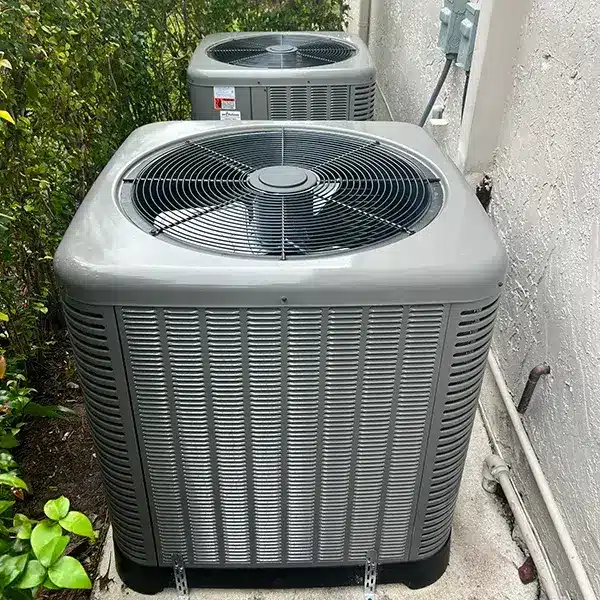
The air handler is the indoor half of your AC system. When it fails, the permit question tends to come up fast, especially because air handler replacement can look simpler than a full system swap. It is not. Here is what SE Florida homeowners need to know.
Quick Answer: Air Handler Replacement Permits in SE Florida
Yes, replacing an air handler in SE Florida requires a permit. The Florida Building Code classifies air handler replacement as regulated mechanical work. It involves electrical connections, refrigerant handling, and ductwork connections, all of which require a licensed contractor, a permit, and a building inspection.
Why Air Handler Replacement Requires a Permit
An air handler is not a standalone appliance. Replacing one involves:
- Disconnecting and reconnecting refrigerant lines
- Electrical wiring and connections
- Duct attachment and sealing
- Drain pan and condensate line reconnection
- Equipment matching to the outdoor condenser unit
The refrigerant work alone requires an EPA 608 certification, which only a licensed HVAC technician holds. The electrical connections fall under the Florida Building Code’s mechanical and electrical provisions.
Consistent service through a qualified AC maintenance company can extend the life of your air handler and delay the need for replacement. When the time comes, though, the permit is part of the process.
The Matching Problem: Why Air Handler Replacement Is More Complex Than It Looks
Here is something many homeowners do not realize until they are already in the middle of a replacement: an air handler must be matched to the outdoor condenser unit.
If you replace only the air handler with a mismatched unit:
- System efficiency drops significantly
- You may void the manufacturer warranty on both components
- The system may not meet current Florida energy efficiency code requirements
In some cases, a mismatched replacement triggers the need to replace the outdoor unit as well. A good contractor identifies this before the job starts, not after.
What the Inspection Covers
After your Airfellows technician replaces the air handler, the building inspector checks:
- Proper equipment matching between air handler and condenser
- Refrigerant charge
- Electrical connections
- Duct connections and sealing
- Condensate drain installation and slope
- Filter access and return air configuration
In SE Florida attics, where most air handlers are installed, improper drainage is one of the leading causes of water damage and mold. Inspectors check this specifically.
Air Handlers in SE Florida Attics: A Specific Risk
Most SE Florida homes have air handlers installed in attics. This creates inspection concerns that are not as common in other regions:
- Attic temperatures can exceed 130°F in summer, stressing the unit and refrigerant lines
- Condensate overflow pans are required under Florida code as a secondary drain safeguard
- Improper insulation of refrigerant lines in hot attic spaces reduces efficiency and accelerates wear
These are code requirements, not optional add-ons. A reputable HVAC repair company that includes permit and inspection as part of the job will catch these details before they become problems.
How the Permit Process Works for Air Handler Replacement in SE Florida
Understanding the steps helps set realistic expectations for your project timeline.
Step 1: Permit application. Your Airfellows technician submits the permit to the local building department. For Palm Beach and Broward counties, most residential mechanical permits are approved within 1 to 3 business days. Some cities process faster through online portals.
Step 2: Equipment ordering. Once the permit is approved, the replacement air handler is ordered or pulled from stock. Matching the unit to your outdoor condenser may narrow the options, so this step sometimes takes a day or two.
Step 3: Installation. Air handler replacement typically takes a half-day to a full day depending on the attic configuration and ductwork complexity.
Step 4: Inspection. After installation, the contractor schedules a building inspection. In SE Florida, inspections are typically available within 2 to 5 business days. Your technician is on-site for the inspection to answer questions and address any items.
Step 5: Permit closed. Once the inspection passes, the permit is closed and you receive documentation of the completed, code-compliant work.
Total timeline from permit application to closed inspection: typically 1 to 2 weeks. Most of that is scheduling time, not actual work time.
What Happens If You Replace an Air Handler Without a Permit
Unpermitted air handler replacement creates the same risks as any unpermitted HVAC work:
- Flagged at home sale
- Insurance complications if the system is involved in a claim
- Potential fines from code enforcement
- Voided equipment warranty
It also leaves the attic installation unverified. In a region where improper condensate drainage can cause thousands of dollars in ceiling and drywall damage, that verification matters.
Final Thoughts on Air Handler Replacement Permits in SE Florida
Replacing an air handler in SE Florida requires a permit. The work touches refrigerant, electrical, and ductwork systems, all regulated under the Florida Building Code. Your contractor handles the permit and coordinates the inspection.
The equipment matching requirement between air handler and condenser is the detail most likely to catch homeowners off guard. Address it upfront with your contractor before equipment is ordered.
Contact Airfellows to schedule an air handler replacement assessment.