Living in Hillsboro Beach offers some of the most stunning views in South Florida. However, that beautiful salt spray coming off the Atlantic Ocean is a silent killer for your air conditioning system. For residents along the A1A, AC units aren’t just fighting the heat—they are fighting a constant chemical battle against salt air corrosion.
At AirFellows, we’ve seen how the coastal environment can reduce the lifespan of an unprotected HVAC system by up to 50%. Here is what you need to know to protect your investment and keep your home cool.
Why Hillsboro Beach Properties Are at Higher Risk
While most of South Florida deals with humidity, Hillsboro Beach is uniquely positioned on a narrow peninsula. Whether your home faces the ocean or the Intracoastal Waterway, your outdoor condenser is constantly bombarded by salt-laden air.
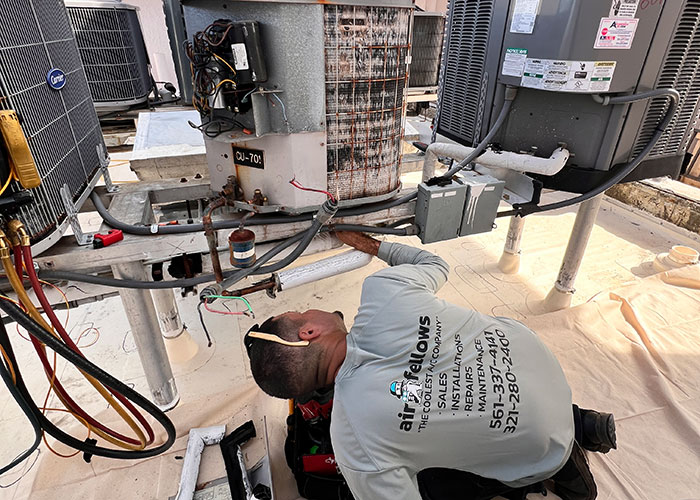
When salt particles settle on the aluminum fins and copper coils of your AC unit, they create a galvanic reaction. This leads to “pitting” and oxidation, which eventually causes refrigerant leaks—the most common reason for premature HVAC repair Hillsboro Beach.
The Hidden Cost of Saltwater Corrosion
Corrosion doesn’t just break your machine; it drains your wallet long before the system fails.
-
Reduced Efficiency: Corroded coils struggle to transfer heat. This means your system runs longer to cool your home, leading to a significant spike in your monthly FPL bill.
-
Frequent Repairs: Salt damage leads to brittle components and thin coil walls, resulting in costly emergency service calls.
-
Total System Failure: An average AC unit might last 10–12 years inland, but in coastal Hillsboro, an unprotected unit can fail in as little as 5 years.
Signs Your AC System Is Already Corroding
Take a quick walk to your outdoor unit. Do you see any of the following?
-
Flaking or Brittle Fins: If the thin metal “fins” on your unit crumble when touched, corrosion is advanced.
-
White Powder: A white, ashy residue on the coils is a sign of aluminum oxide (the early stage of salt damage).
-
Black Pitting: Dark spots on the copper lines often indicate that the metal is being eaten away.
Top Solutions for Coastal AC Protection
You don’t have to accept a short lifespan for your air conditioner. There are two primary ways to fight back:
1. Professional Anti-Corrosive Coatings
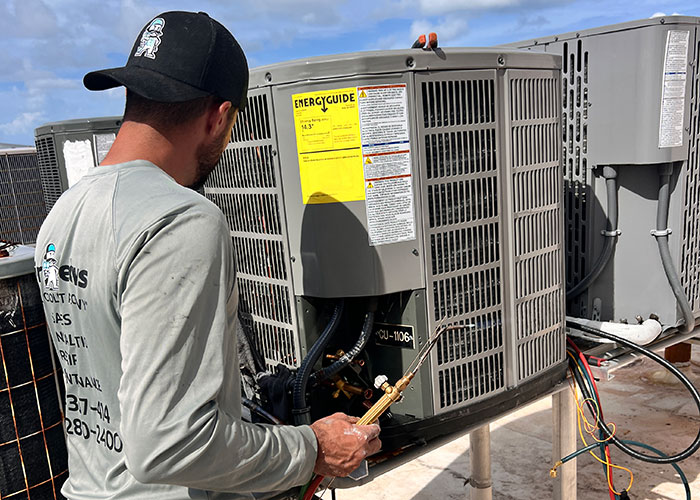
The most effective defense is a specialized coating (like Bronz-Glow or similar epoxy-phenolic coatings). These are applied to the coils to create a barrier that salt cannot penetrate. If you are planning a new AC installation, we highly recommend opting for a pre-coated “coastal grade” unit.
2. Regular Coastal Maintenance Rinsing
A simple yet effective DIY tip for Hillsboro residents is to gently rinse your outdoor condenser with fresh water once a month. This washes away accumulated salt crystals. However, this must be paired with a professional preventative maintenance plan to ensure the internal components remain clean and lubricated.
Why Choose a Local Hillsboro Beach AC Specialist?
Generic AC companies often overlook the specific challenges of beachside living. At AirFellows, we specialize in the unique demands of South Florida’s coastal climate. We don’t just fix symptoms; we provide long-term protection strategies to ensure your comfort isn’t interrupted by the Atlantic breeze.
Is your AC ready for another season on the coast? Don’t wait for a refrigerant leak to leave you in the heat.
Call AirFellows Today 561-337-4141 or fill out the form here to protect your system from the salt air.